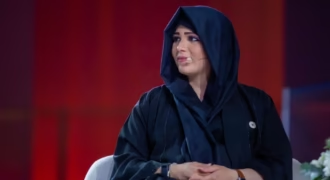
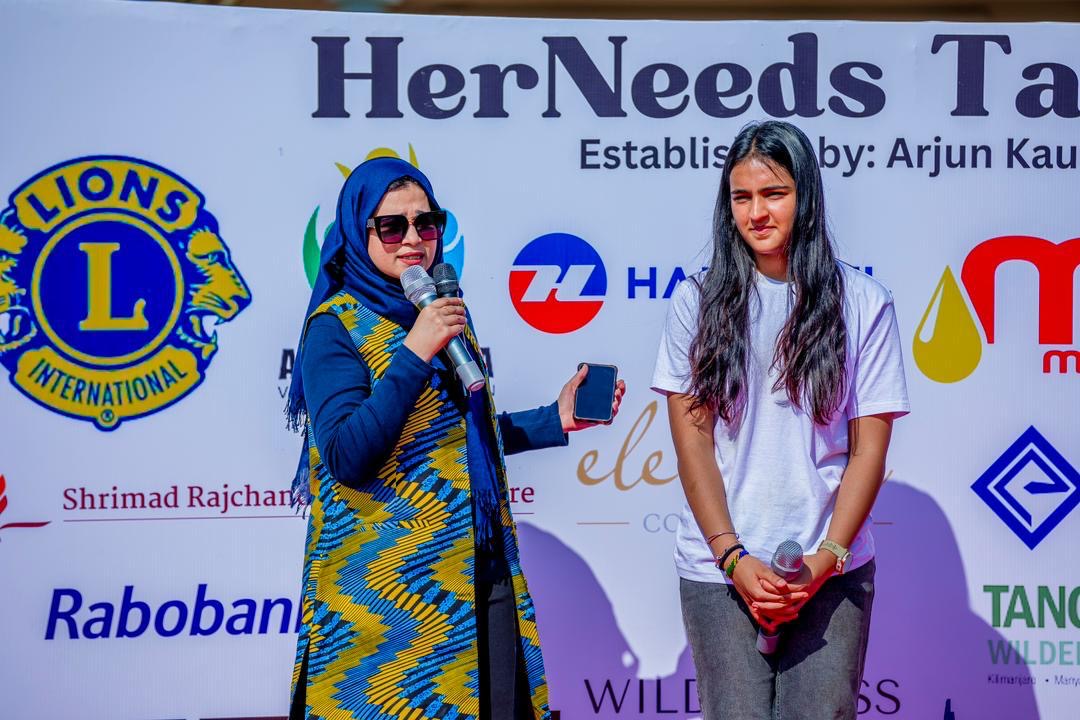
Arjun Kaur Mittal is a young Tanzanian changemaker whose work in menstrual health, girls’ education, and youth leadership has already transformed thousands of lives across Tanzania while inspiring students globally. At just 16, she combines academic excellence, high‑performance sport, and large‑scale social impact in a way that makes her stand out as a powerful new voice in global health and gender equity.
Early life and defining experience
Arjun’s journey began with a deeply personal family health crisis when her father suffered paralysis in Tanzania. Her family had to travel a cumulative distance of 11,875 kilometres to access the healthcare he needed, a number that became symbolic for her of the barriers ordinary Tanzanians face, especially women and girls.
From this experience, she drew two lasting insights that now shape her purpose. First, that geography and income should never decide who gets healthcare or dignity; second, that a determined young person can turn private pain into public good if they act deliberately rather than waiting for others to step in.
Founding “Her Needs” Tanzania
In 2024, Arjun founded Her Needs Tanzania, a nonprofit dedicated to ending period poverty and advancing girls’ education in rural communities. The initiative addresses both access and systems—providing menstrual products while challenging the cultural, economic, and policy barriers that keep girls out of school.
Some of Her Needs’ key achievements include:
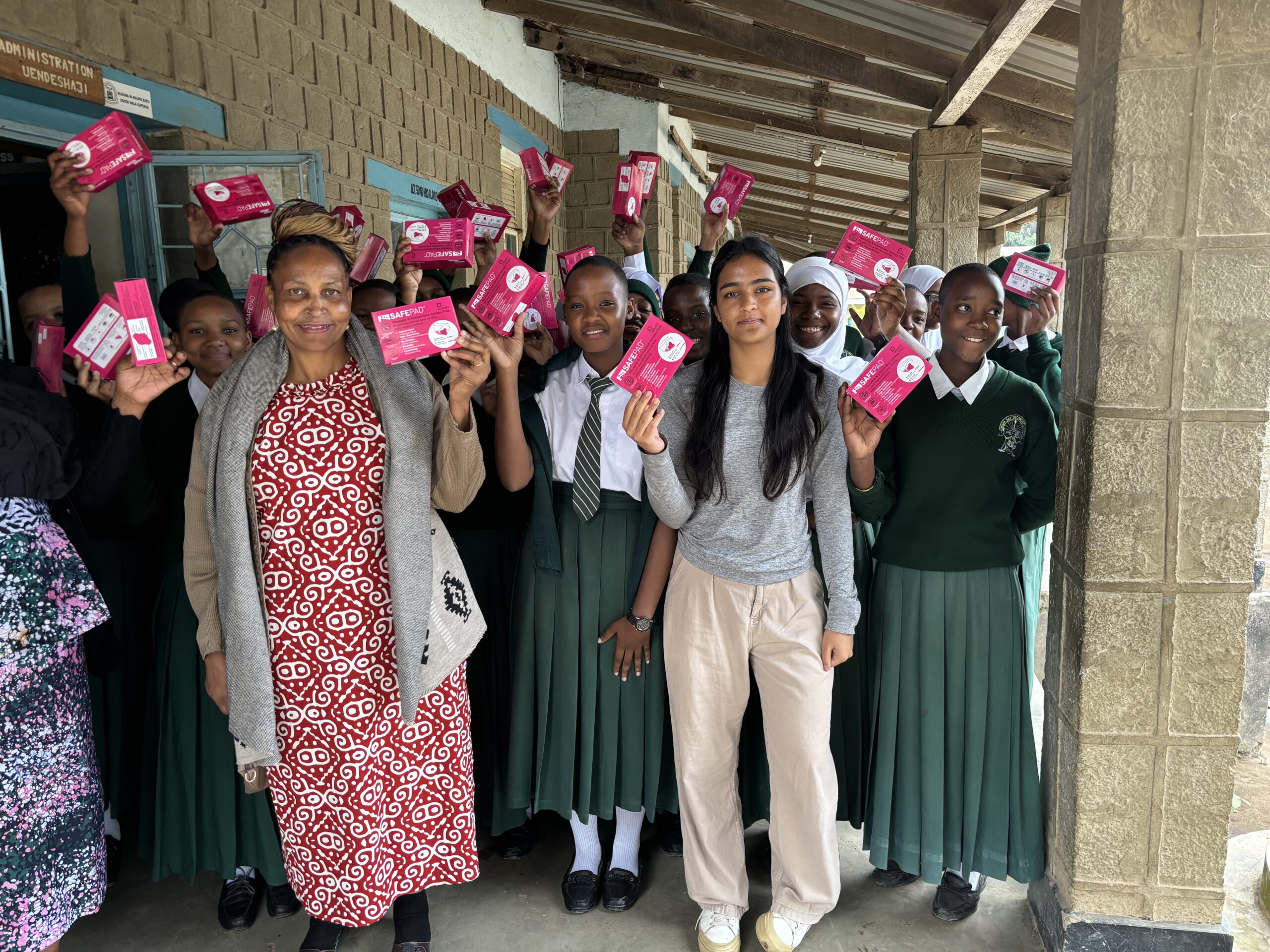
- Distributing over 22,000 reusable sanitary pads to girls across 43+ schools in Tanzania, providing many students with up to three years of menstrual support.
- Raising more than USD 85,000 (over 200 million Tanzanian shillings) to fund menstrual products, education programmes, and community-based initiatives supporting girls’ health and dignity.
- Reaching 22,000+ girls and students through pad distribution, school programmes, and wider community engagement.
Beyond distribution, Her Needs integrates menstrual health education, community workshops, and partnerships with local leaders—positioning menstrual health as a right rather than a privilege.
This past summer, Arjun also launched a sustainable pad production initiative at Arusha Girls Boarding School, partnering with a boarding school of 400 girls to build an enterprise-style model. Students were trained to sew, market, and sell reusable sanitary pads, creating both menstrual access and income-generating skills. To ensure continuity, a digital version of the workshop—including sewing tutorials and marketing lessons—was recorded and uploaded to the school’s computer lab, allowing the programme to continue as a generational, student-led initiative.
Looking ahead, Arjun aims to scale this model significantly.
Her Needs – Future Endeavours
Policy advocacy (ongoing):
- Continue parliamentary engagement to push for VAT exemption on sanitary products and broader menstrual equity reforms.
Next 2 years:
- National expansion across Tanzania: Scale Her Needs beyond Arusha to harder-to-reach rural villages, with the long-term goal of nationwide coverage.
- Sustainable enterprises: Expand the sewing-based pad production programme across local and regional secondary schools, embedding menstrual equity within school-run social enterprises.
Next 5 years:
- Regional growth across East Africa: Expand Her Needs into Zambia, Malawi, Burundi, Uganda, and Mozambique, supported by a strong local leadership team and cross-border partnerships.
Together, these efforts reflect Arjun’s commitment to building solutions that are not only impactful today, but structurally sustainable for the future.
Policy advocacy and national recognition
Arjun has deliberately moved beyond charity into advocacy, pushing for structural reforms that will outlast any single project. She was invited to address the Tanzanian Parliament, where she advocated for removing the 18% tax on pads and menstrual products and for recognising menstrual health as a national priority.
Her initiative and leadership have been formally recognised in Tanzania:
- The Tanzanian Parliament publicly acknowledged and appreciated her work through Her Needs, signalling that a youth‑led project can influence national discourse.
- Regional leaders and media outlets have highlighted her as an example of how a single student can mobilise international partnerships to transform local communities.
For Arjun, menstrual health is framed as a human rights and economic issue, not just a hygiene concern. That framing is central to what makes her leadership distinctive.
Empowering women entrepreneurs: Fursa for Women
Understanding that true equity demands economic empowerment, Arjun launched Fursa for Women, a programme designed to support mothers in her target communities. The initiative trains women in financial literacy, project management, and business skills so they can grow sustainable income streams.
Key outcomes of Fursa for Women include:
- Training at least 50 mother‑entrepreneurs in Arusha, equipping them with skills to scale their small businesses.
- Linking menstrual health access with family economic stability, so that mothers can both support their daughters’ education and gain greater control over household finances.
- Website she created: https://www.maasaimarkets.info/
By pairing menstrual equity with entrepreneurship, Arjun demonstrates a systems mindset: girls’ education, women’s income, and public health all reinforce one another when addressed together.
Sport, resilience, and mental health
Arjun is also a national‑level triathlete who has used sport as a platform for both personal healing and social advocacy. She has coached more than 65 students in Arusha and led four‑week football camps that promote fitness as a form of preventative healthcare.
Her athletic story is inseparable from her mental health journey:
- She survived anorexia nervosa, a serious eating disorder that took her away from competition and forced her to rebuild her relationship with her body and performance.
- After recovery, she returned to elite competition and qualified for the T100 World Championships, describing this as a race won not only on the track but in reclaiming her body and purpose.
Through this, Arjun positions sport as both a metaphor and tool for resilience: each training session, coaching clinic, and race demonstrates that discipline and self‑belief can turn vulnerability into strength.
Academic excellence and research
Alongside her activism and sport, Arjun maintains a high academic standard at North London Collegiate School Dubai, where she serves as Head Girl. She uses her school leadership role to weave service into the everyday culture of students and teachers.
Her academic work connects directly to her activism:
- Her IB Extended Essay critically examines the economic impact of menstrual inequity, linking lost school days and dropout rates to broader national growth indicators.
- She is collaborating with researchers at the University of Dar es Salaam on a study that quantifies how access to sanitary pads affects girls’ school attendance and contributes to economic development. This research paper is set to be published in the coming months in the Tanzanian Economic Review
In school, she has:
- Led the Charity Committee in large‑scale fundraising and volunteering campaigns, including service trips from Dubai to Tanzania.
- Helped launch a CAS (Creativity, Activity, Service) trip framework focused on long‑term partnerships with Tanzanian schools rather than one‑off visits.
This fusion of academic research, school leadership, and field implementation gives her work unusual depth for someone still in secondary school.
Building platforms for other students
Arjun is not only building her own project but also helping other young people design theirs. She created “Enterprise: The Passion Project,” a platform that guides students worldwide in launching service initiatives with sustained community impact.
Through this platform, she:
- Mentors younger students on identifying community needs, designing sustainable solutions, and building partnerships instead of pursuing short‑term charity drives.
- Encourages a model of youth leadership rooted in empathy, data, and accountability, showing classmates that serious change‑making is possible even before university.
This emphasis on enabling others sets her apart from many young leaders whose impact remains closely tied to a single project.
Global awards and recognition
Arjun’s achievements have received growing international recognition. She has become one of the most visible youth voices on menstrual equity and girls’ education emerging from Tanzania and the UAE.
Key recognitions include:
- Selection as a Top 50 finalist for the 2025 Chegg.org Global Student Prize, a prestigious 100,000 USD award that honours exceptional students making real‑world impact.
- Shortlisting among three UAE‑based pupils for the 2025 Global Student Prize, spotlighting her as a leading student changemaker in the region.
- Features in media outlets and partner organisations highlighting Her Needs’ work in delivering reusable pads, raising significant funds, and lifting up thousands of girls.
These honours matter not just as accolades but as platforms that amplify her advocacy and draw in new partners to support her mission.
What makes her unique
Several interlocking traits make Arjun’s leadership uniquely compelling.
- Systems thinking at a young age: She connects menstrual health, education, economic policy, and macro‑economic growth rather than treating each as a separate issue.
- Lived empathy: Her work is rooted in personal family experience and ongoing conversations with girls and mothers in Tanzanian communities, ensuring that projects stay grounded rather than symbolic.
- Multi‑dimensional excellence: She simultaneously sustains high‑level sport, academic research, and large‑scale social entrepreneurship, showing that impact need not come at the expense of personal growth.
- Commitment to mental health: Her openness about recovering from anorexia and returning to elite competition offers a powerful example of vulnerability, resilience, and self‑acceptance for young people.
All of these elements contribute to a leadership style that is both analytically rigorous and deeply compassionate.
Motivation and inner drive
Arjun’s motivation appears anchored in three core convictions. First, that every girl deserves the dignity and freedom to attend school without being held back by biology or poverty. Second, that youth are not “leaders of tomorrow” but crucial problem‑solvers today, capable of shaping policy, research, and community practices. Third, that personal struggle—whether a family health crisis or mental illness—can be transformed into a source of insight and solidarity rather than shame.
She often frames menstrual health not as a “women’s issue” but as an economic and societal priority, arguing that when girls lose days of school each month, entire communities lose out on talent and future productivity. That framing fuels her persistence in both grassroots and policy work.
Dreams and future aspirations
Looking ahead, Arjun’s ambitions extend far beyond one country or one programme. If she wins the Global Student Prize, and even if she does not, she has laid out a clear roadmap for scaling her impact.
Her stated future plans include:
- Expanding Her Needs into a pan‑African menstrual equity movement, supporting girls in multiple countries facing similar barriers.
- Introducing solar‑powered pad production units, which would combine renewable energy, local manufacturing, and environmental sustainability while creating jobs for women.
- Launching mobile health clinics to serve rural and under‑resourced communities, bridging the gap between urban hospitals and remote villages.
- Funding more scholarships for girls, ensuring that access to pads is matched by access to quality secondary and higher education.
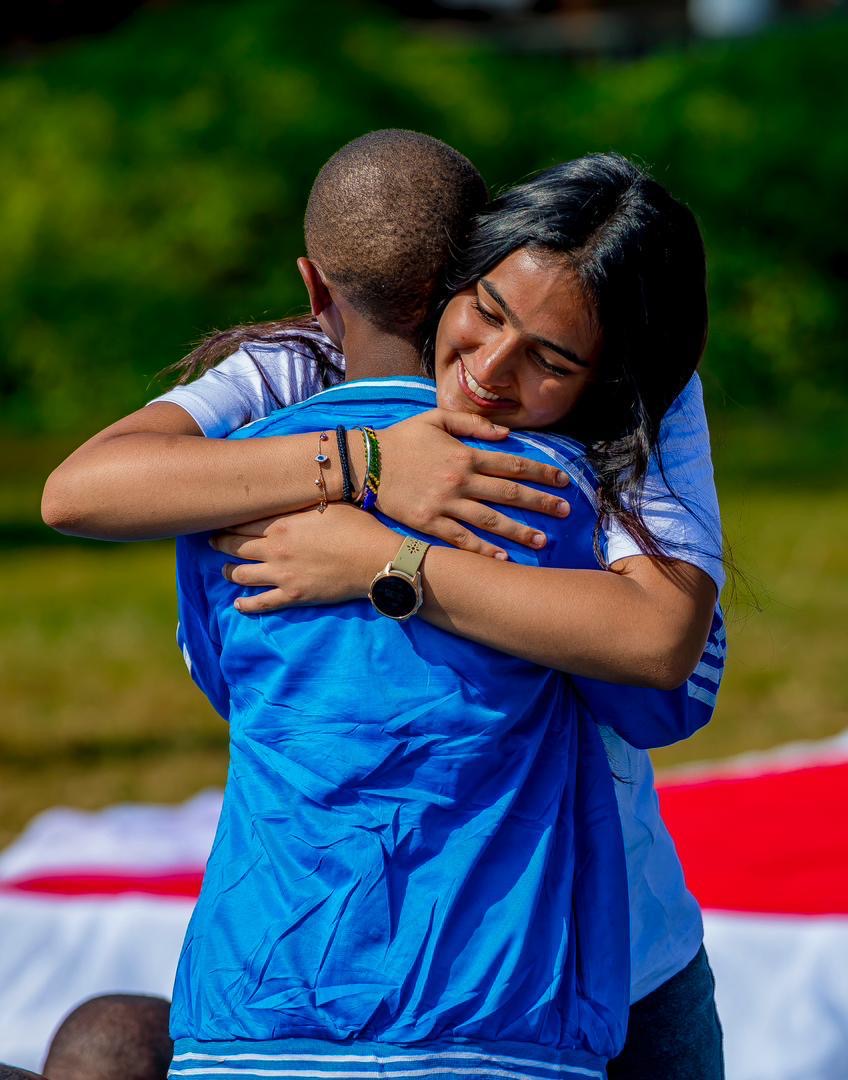
She also intends to deepen her research and policy work, using data to convince governments and international bodies that menstrual equity is both morally essential and economically smart. Over time, this points toward a future in public health, development economics, or global policy—fields where her lived experience and early work will be powerful assets.
Goals in life and vision of impact
While still in school, Arjun’s goals are surprisingly clear and long‑term. She aims to:
- Build a sustainable, community‑owned ecosystem where girls have continuous access to menstrual products, accurate health education, and supportive school environments.
- Continue mentoring students worldwide so that Her Needs and Enterprise: The Passion Project become models others adapt to local contexts, multiplying impact beyond what she can lead personally.
- Advocate at national and international forums so that menstrual health is embedded in education, health, and gender policies across Africa and beyond.
Her broader life goal is to ensure that no girl has to choose between her body and her education, and that no family has to travel thousands of kilometres simply to access basic care. To her, true success will be measured not in titles or awards but in the number of communities that no longer need her help because the systems around them have finally become just.